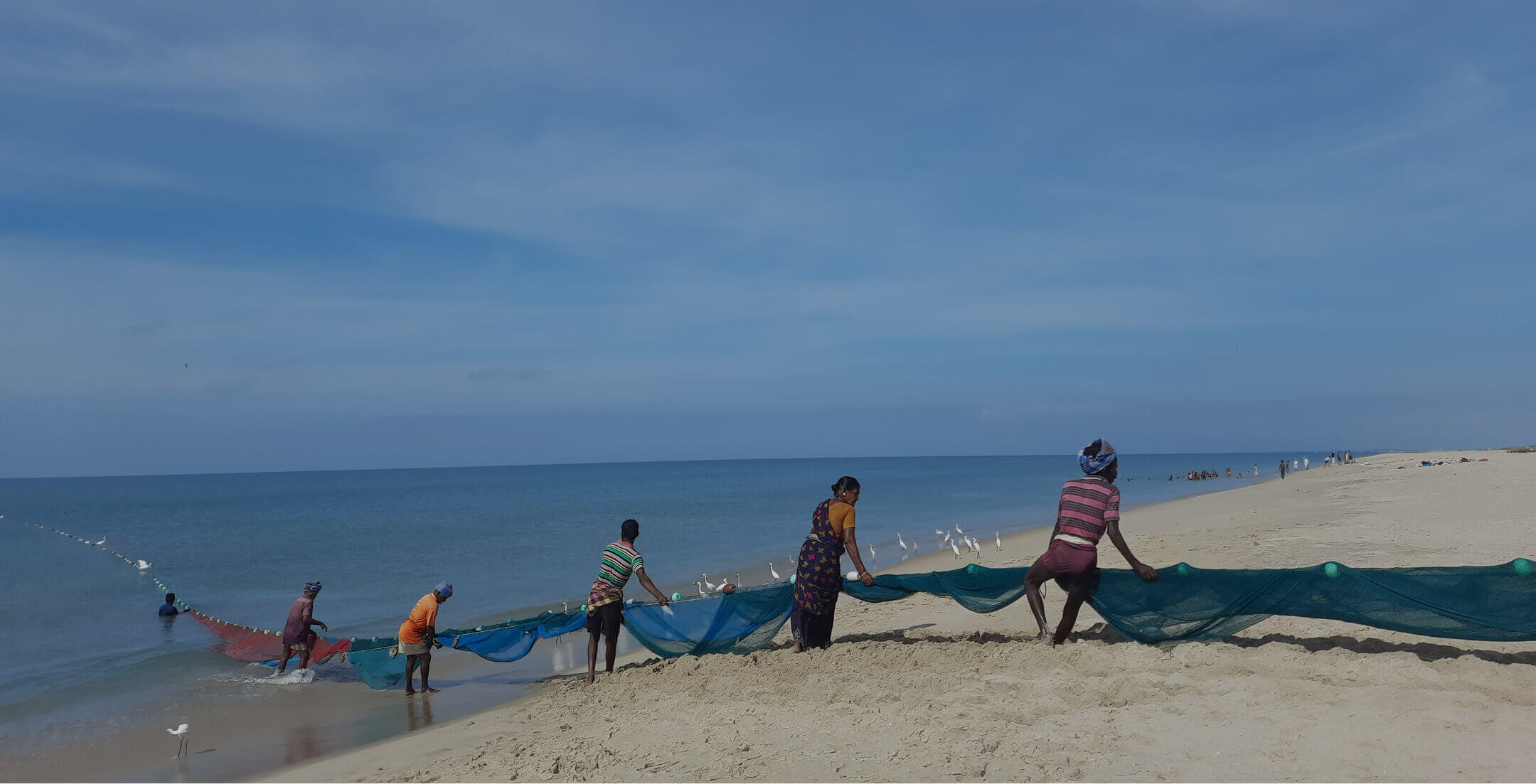
supporting healthy ecosystems
thriving communities
India's coastal, marine and island geographies face growing environmental, developmental and social justice challenges. These affect over 15 million people who depend directly on fishing and its allied sectors for their livelihoods.
Dakshin's work is grounded in the belief that marine conservation is most effective when shaped with communities who use and depend on marine resources. We work alongside these communities to inform and catalyse conservation and natural resource management, while supporting sustainable livelihoods, social development, and environmental justice.
Catch the current
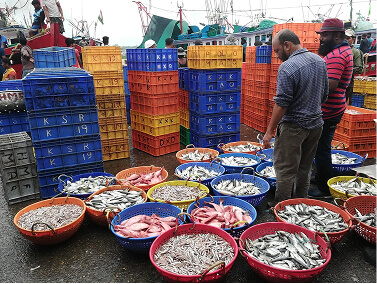
In Thota Bengre, culture is a powerful determinant of cuisine
Eswaran, H.
June 2023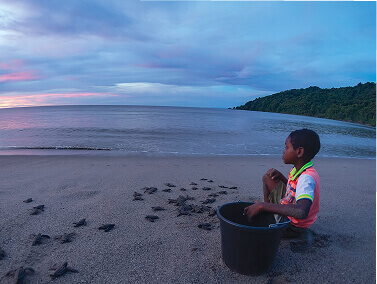
Decolonising sea turtle conservation
Eswaran, H.
June 2023
Small-scale fisheries and community resilience
Eswaran, H.
June 2023Our Approach
We bring together research expertise from the natural and social sciences to address environmental and livelihood challenges. This work is grounded in local contexts, flexible across scales, and implemented in partnership with communities, government departments, and other civil society organisations.
SeaChange
SeaChange is Dakshin's intersectoral approach to achieving system-level change. It brings our broader approach into practice by working across five crucial, interlinked themes: conservation, fisheries management, coastal livelihoods, resource governance, community health and sports.
This approach is designed to put philanthropic resources to the best use by building ground-up capacities that help small-scale fisher (SSF) communities respond to complex problems.
Learn MoreSeaChange
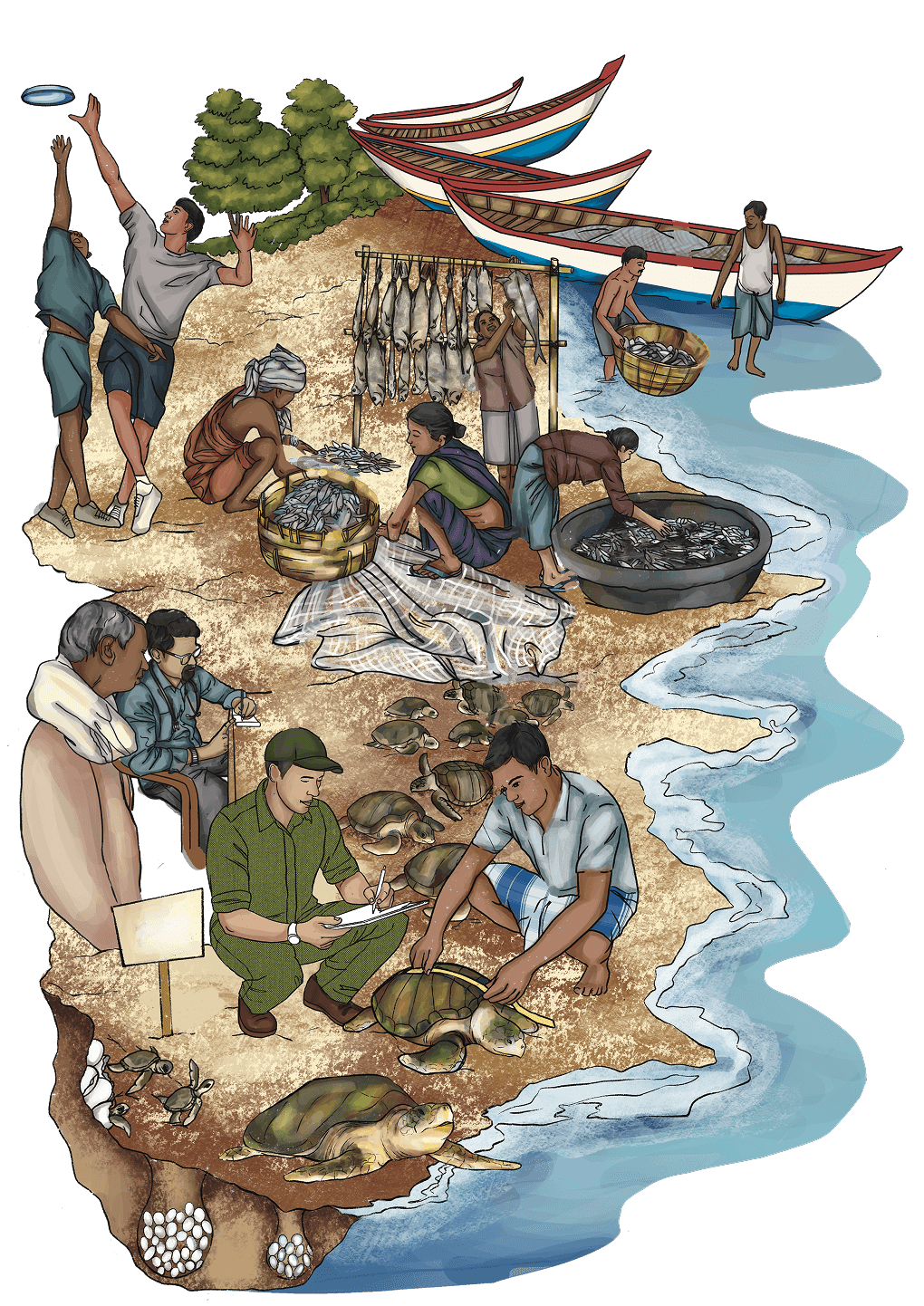
Our Programmes
Communities and Resource Governance
Community Wellbeing
Conservation Crossroads
Livelihoods
Marine Flagships
Sustainable Fisheries
Impact
As on 31st January 2026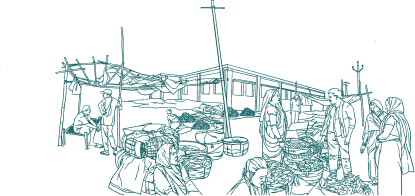
43,000+
Community members engaged
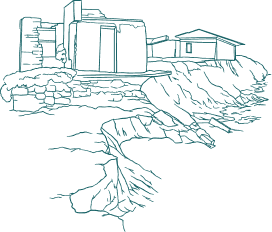
120
Villages across 6 districts in 4 states
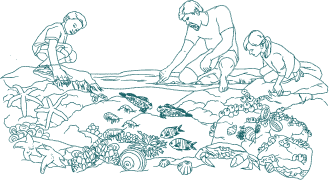
3000 +
Kilometers of coastline covered
Dakshin's intersectoral approach has reached a diverse community of active fishers, women, youth, children, panchayats, government departments, and civil society organisations. But these numbers tell only part of the story.
Our interventions are designed to create both tangible and intangible outcomes. Beyond facilitating measurable change, we focus on building relationships, strengthening governance, and generating knowledge to lay the foundation for systems change. This means looking past what can be easily counted, and attending to how change is shaped, who it includes, and how it can sustain itself.
Resources
With coral reefs at risk, new ‘Changing Planet’ explores innovative solutions

24 Oct,2023
3 min read
Get inspired by this revived W.H. Auden’s Hymn to the United Nations. "Let music for peace Be the paradigm, For peace means to change At the right time, As the World-Clock, Goes Tick and Tock.So may the story Of our human city Presently move
Read moreOne-fifth of Mekong River fish face extinction
24 Oct,2023
3 min read
International days and weeks are occasions to educate the public on issues of concern, to
Read moreBiologist’s keen eye spots (another) new species in the Pacific
24 Oct,2023
3 min read
In 1945, representatives of 50 countries met in San Francisco at the United Nations Conference on International Organization to draw up the United Nations Charter. The United Nations officially came into existence on 24 October 1945
Read more