The Andaman Nicobar Environment Team (ANET) is a multidisciplinary research station and collaborative field base for environmental research, conservation and education in the Andaman Islands. It supports sustained, place-based work in these remote, biodiverse tropical island ecosystems that are otherwise difficult to access and study.
From MCBT to Dakshin Foundation
Building on pioneering herpetological surveys conducted in the Andaman Islands in the 1970s, ANET began as an initiative of the Madras Crocodile Bank Trust in 1993. Early efforts focused on surveys of flagship species such as the saltwater crocodiles, the king cobra, and marine turtles, while also revealing wider ecological pressures, including unregulated resource extraction.
Over the years, ANET expanded its work to address these challenges through research, conservation, and education across marine and terrestrial systems. In doing so, it established a strong local and island-wide presence and supported long-term ecological monitoring and institutional collaboration. In 2017, the MCBT entered into a formal partnership with Dakshin to manage its operations.
In 2019, with support from Rohini Nilekani Philanthropies, Dakshin Foundation acquired ANET.
What ANET does
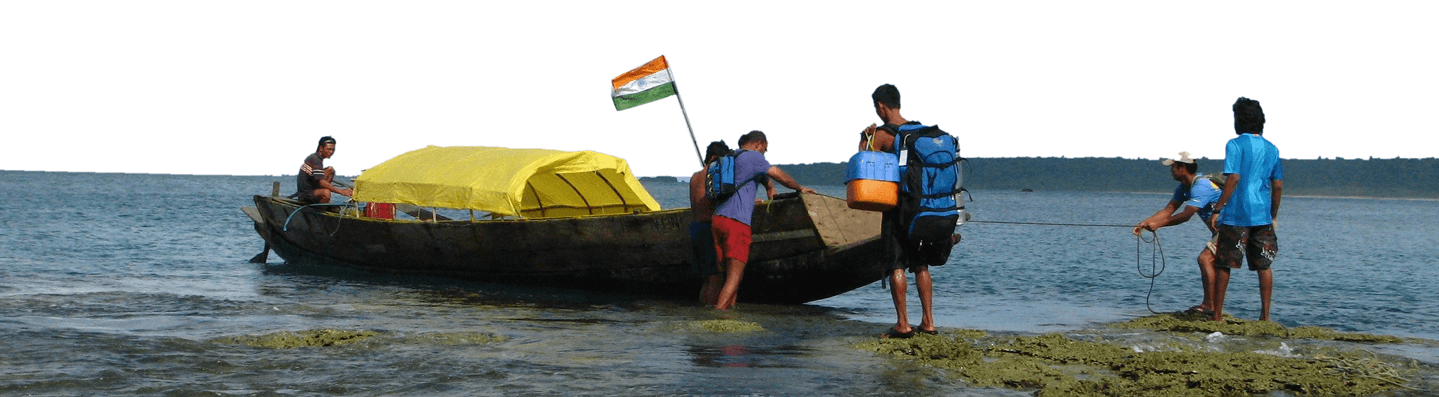
Located in the coastal village of Wandoor, ANET is a multidisciplinary research hub, conservation centre, and education base in the Andaman Islands. This includes multisectoral initiatives aligned with Dakshin Foundation’s SeaChange framework for coastal and marine sustainability. To this effect, ANET facilitates work that focuses on understanding and responding to the islands’ complex social-ecological systems, and on generating knowledge that informs effective interventions that are beneficial for both ecological sustainability and human well-being.
The centre hosts and enables long-term ecological research across marine and terrestrial ecosystems, including coral reefs, seagrasses, forests, mangroves, and coastal habitats. This field-based research supports biodiversity monitoring, species studies, and ecosystem understanding that would be difficult to sustain without a permanent local base.
ANET also facilitates learning and capacity building through workshops, academic courses, and experiential programmes. In collaboration with universities, research institutions, and government bodies, it supports field-based training, and place-based education that connects scientific understanding with lived island contexts.
Alongside research and education, ANET supports collaborative conservation work with partner organisations, local communities, and government agencies.
Resources
With coral reefs at risk, new ‘Changing Planet’ explores innovative solutions

24 Oct,2023
3 min read
Get inspired by this revived W.H. Auden’s Hymn to the United Nations. "Let music for peace Be the paradigm, For peace means to change At the right time, As the World-Clock, Goes Tick and Tock.So may the story Of our human city Presently move
Read moreOne-fifth of Mekong River fish face extinction
24 Oct,2023
3 min read
International days and weeks are occasions to educate the public on issues of concern, to
Read moreBiologist’s keen eye spots (another) new species in the Pacific
24 Oct,2023
3 min read
In 1945, representatives of 50 countries met in San Francisco at the United Nations Conference on International Organization to draw up the United Nations Charter. The United Nations officially came into existence on 24 October 1945
Read moreFunded by